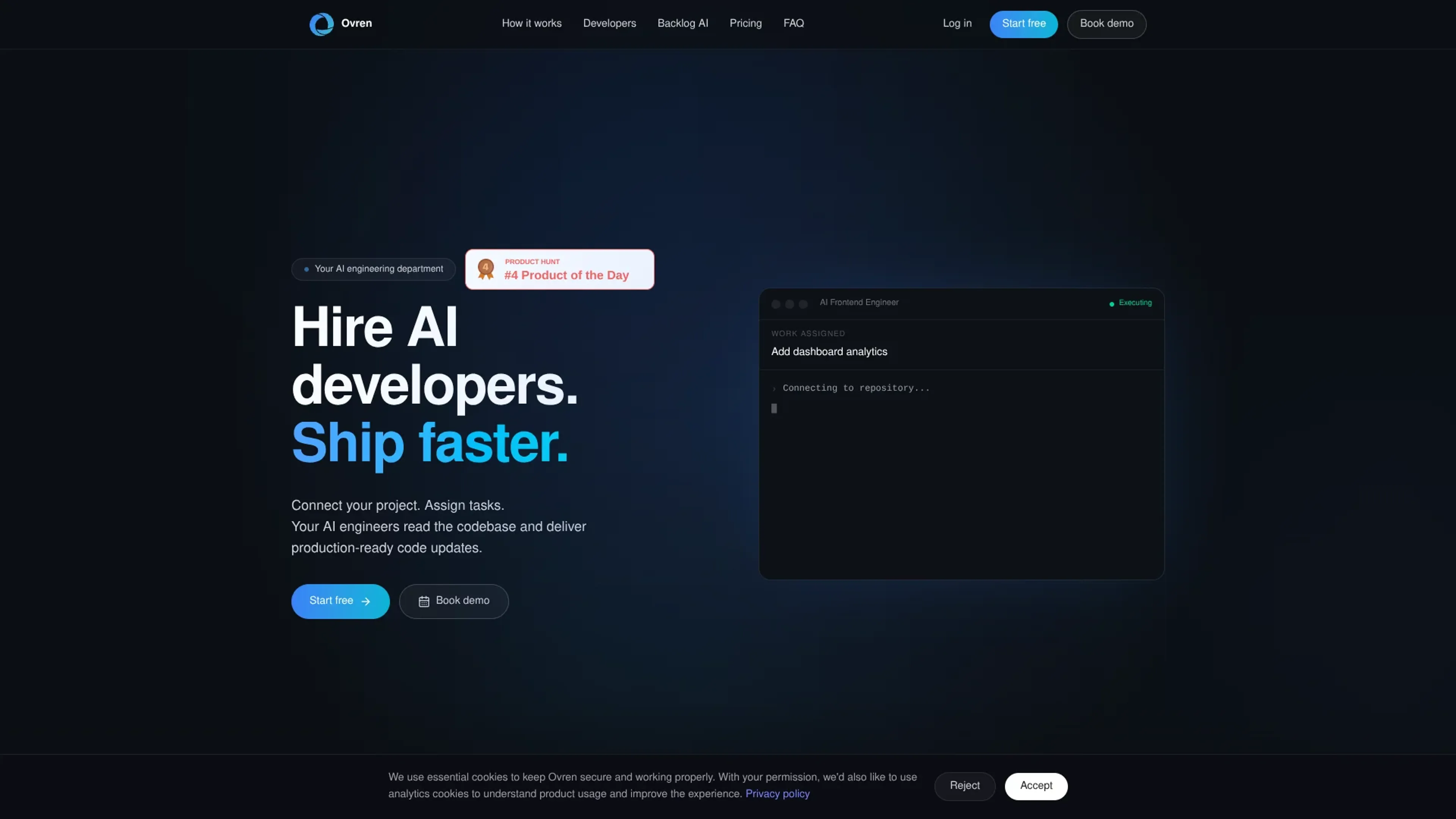
Ovren turns large language models into practical software engineers that plug directly into a team’s GitHub workflow. After a repository is connected, engineering leaders can assign tickets to specialized AI frontend or backend developers that read the codebase, plan work and propose production ready changes. Instead of chatting about snippets, Ovren operates as a task oriented assistant. It pulls clearly scoped backlog items, edits files, runs type checks and builds, then opens a reviewable code update with an execution log so human maintainers can approve or reject the change.
Key Features:
AI Engineering Roles: Dedicated frontend and backend AI developers implement UI features, APIs, refactors and tests, with a QA engineer role planned for automated end to end testing.
Autonomous Backlog Execution: AI engineers pull clearly scoped tasks from project queues, work in parallel and ship incremental updates that keep polish, fixes and technical debt moving.
GitHub Native Workflow: A one time GitHub connection lets Ovren index the codebase, follow existing conventions and return structured code updates with execution logs rather than chat transcripts.
Security and Approval Controls: Code runs in isolated, short lived environments, is not stored or used for training, and never reaches main branches without human review.
Pros
Minimal setup: No prompt engineering or heavy configuration, just connect a repository and assign tasks.
Strong fit for busy teams: Offloads smaller items so in house developers focus on higher impact product work.
Transparent outputs: Execution logs and focused diffs make review straightforward and help maintain trust.
Security conscious design: Ephemeral processing and no training on customer code suit stricter environments.
Cons
GitHub dependency: Organizations on other version control platforms may not be able to adopt Ovren yet.
Credit estimation: New users must learn how many credits typical tasks consume before forecasting spend accurately.
Narrow scope: The product targets engineering tasks only, so non technical teams gain little direct value.
Who is Using Ovren?
SaaS Startups: Use Ovren to extend small engineering teams for features and bug fixes.
Product Engineering Teams: Send small tickets and UI tweaks to AI developers to protect deep focus.
Agencies and Consultancies: Apply Ovren across client repositories for repetitive integration work and change requests.
Indie Hackers and Solo Founders: Gain production grade updates without hiring full time engineers.
Uncommon Use Cases: Hackathon teams building demos overnight; open source maintainers trying it on low risk cleanups and documentation.
Pricing:
Free: $0 per month; 5 credits, 1 AI developer, unlimited projects, execution reports, and community support.
Pro: $20 per month; 50 credits, 2 AI developers, unlimited projects, standard support, and extra credits available anytime.
Team: Custom pricing; unlimited AI developers and credits, SSO/SLA, higher concurrency, and priority support.
Disclaimer: Please note that pricing information may not be up to date. For the most accurate and current pricing details, refer to the official Ovren website.
What Makes Ovren Unique?
Ovren presents AI as named engineers inside a backlog, not a chat box. Autonomous task pulling, execution logs and strict review gates mirror familiar engineering workflows, so the tool behaves more like an extra teammate than a novelty, especially for teams obsessed with shipping production code.
How We Rated It:
Accuracy and Reliability: 4.3/5
Ease of Use: 4.7/5
Functionality and Features: 4.2/5
Performance and Speed: 4.5/5
Customization and Flexibility: 3.9/5
Data Privacy and Security: 4.6/5
Support and Resources: 4.0/5
Cost-Efficiency: 4.4/5
Integration Capabilities: 3.8/5
Overall Score: 4.3/5
AI Developers That Actually Ship Code:
Ovren fits teams that want production ready code updates from AI with little overhead. By attaching autonomous developers to a GitHub repository and keeping humans in charge of review, it helps organizations clear backlogs faster while preserving existing engineering standards and workflows.