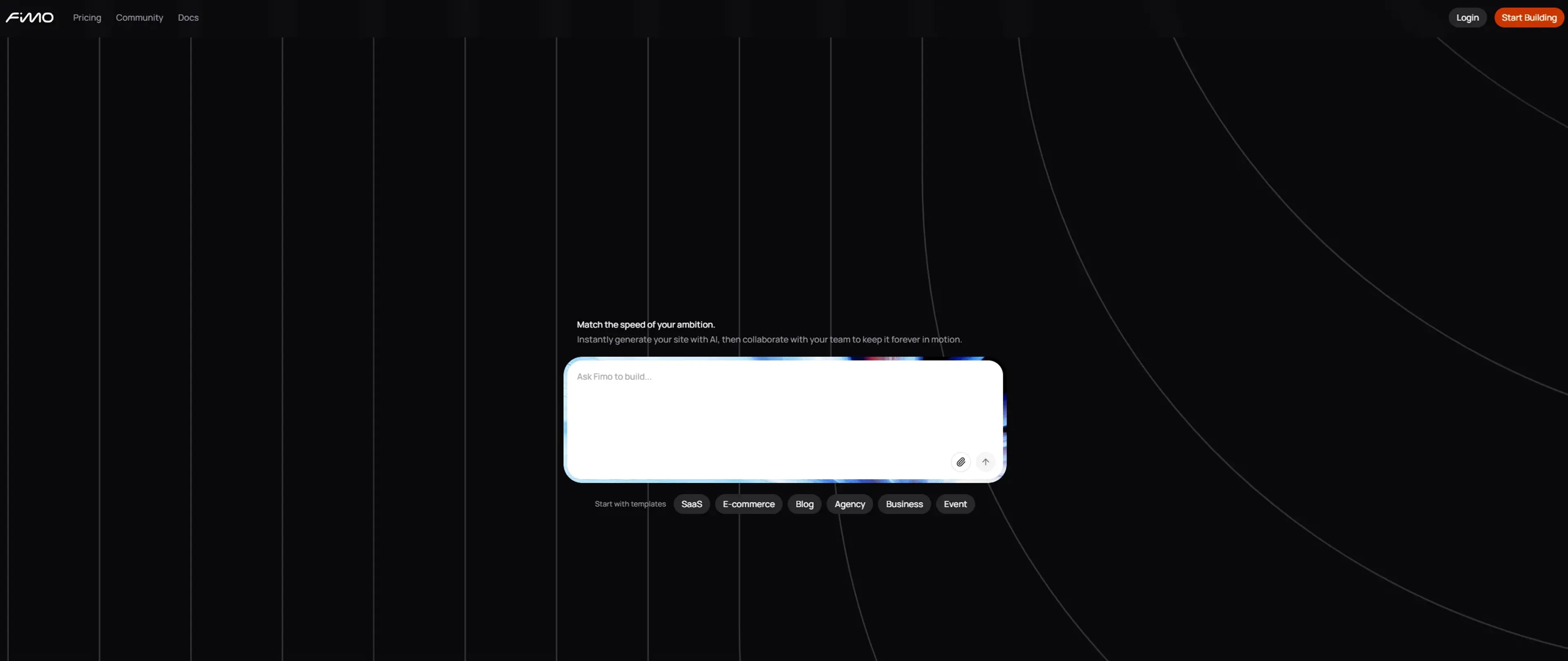
Fimo is an AI native content management system that brings generative tools directly into how teams build and run websites. It combines a structured headless CMS, a visual editor, and AI assistants that help write, refactor, and reorganize content. Product, marketing, and engineering teams can iterate on copy and layouts faster while keeping full history and control over what gets published. The tool treats AI as part of everyday editing rather than a separate experiment.
Key Features:
AI-assisted content editing: Use prompts to draft, rewrite, or expand page copy directly inside the CMS editor.
Structured Strapi foundation: Built on Strapi’s headless CMS so AI edits respect content types, components, and locales.
Versioning and rollback: Tracks every change with history and snapshots, letting teams restore earlier states in seconds.
Visual plus code editing: Non-technical users edit visually, while developers can open code for custom components and styling.
Pros
Faster iteration: AI suggestions and visual tools shorten time from idea to production-ready copy and layouts.
Safety for live sites: Versioning and branching reduce the risk of AI changes breaking important pages.
Developer friendly: Code access and a headless foundation keep engineers in control of structure and performance.
Cross-team friendly: Provides one place for content, design, and engineering to collaborate on AI-driven changes.
Cons
Newer product: Has a smaller ecosystem and fewer tutorials than long-established CMS options.
Technical setup: Best results still assume developer involvement for deployment, hosting, and environment strategy.
AI variability: Model or prompt changes can slightly shift behavior over time.
Who is Using Fimo?
Product and marketing teams at SaaS companies: Using Fimo to test messaging and pages on production-grade sites.
Digital agencies and studios: Managing multiple client sites while AI drafts copy that strategists refine.
In-house web and platform teams: Giving business users a safer editing surface on top of headless infrastructure.
Content and documentation teams: Reworking docs, changelogs, and knowledge bases with structured AI suggestions.
Uncommon Use Cases: Adopted by innovation groups to prototype content tools; Used by technical founders to keep sites current without a web team.
Pricing:
Free: $0 per month; includes up to 3 projects and 2,500 monthly credits.
Premium: $25 per month; includes everything in Free plus 25,000 monthly credits, unlimited public and private projects, unlimited active users, 30-day version history, and removal of the platform badge.
Disclaimer: Please note that pricing information may not be up to date. For the most accurate and current pricing details, refer to the official Fimo website.
What Makes Fimo Unique?
Fimo’s key distinction is that AI is wired into structured content, versioning, and deployments, so experimentation happens with clear guardrails instead of ad hoc scripts or plugins. It bridges visual editing, generative assistance, and code-level extensibility in a single tool, which makes it very attractive for teams that treat their site as real software rather than a disposable template.
How We Rated It:
Accuracy and Reliability: 4.4/5
Ease of Use: 4.2/5
Functionality and Features: 4.1/5
Performance and Speed: 4.3/5
Customization and Flexibility: 4.0/5
Data Privacy and Security: 4.0/5
Support and Resources: 3.8/5
Cost-Efficiency: 4.1/5
Integration Capabilities: 4.2/5
Overall Score: 4.1/5
Fimo Speeds Up Web Editing While Keeping Teams In Control:
Fimo offers a compelling option for teams that want AI to speed up serious websites while still honoring developer workflows, structured data, and the realities of long-lived projects. It is particularly appealing for organizations already leaning toward headless architectures that now want AI help without surrendering control over code, content models, or deployment practices.