
AISAP
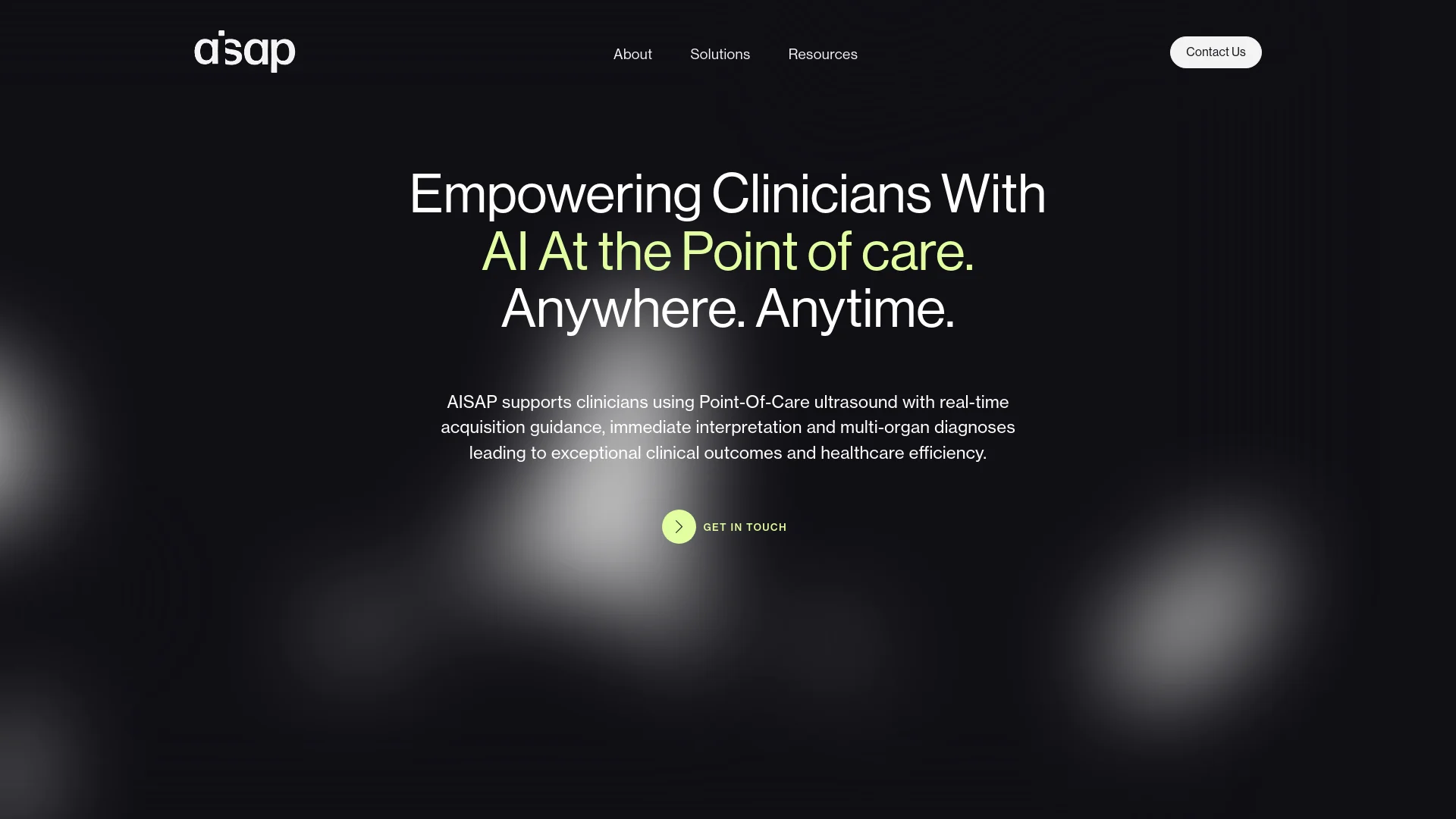
Revolutionizes ultrasound with real-time guidance, instant interpretation, multi-organ diagnosis.
Key Takeaways
- What it is
- Revolutionizes ultrasound with real-time guidance, instant interpretation, multi-organ diagnosis.
- Best for
- Real-Time Acquisition Guidance
- Immediate Interpretation
- Multi-Organ Diagnosis Capability
- Rating
- 4.6/5
What is AISAP?
AISAP is a groundbreaking AI tool designed to transform point-of-care ultrasound diagnostics. It provides clinicians with real-time acquisition guidance, immediate interpretation, and multi-organ diagnoses, enhancing both clinical outcomes and overall healthcare efficiency. AISAP’s integration of AI into clinical practice represents a significant advancement in improving patient care across diverse medical settings.
AISAP stands out for its ability to deliver advanced diagnostic capabilities directly at the point of care. Its real-time analytical features and multi-organ diagnostic support provide a level of diagnostic assistance previously unavailable in many settings, enhancing overall patient care and operational efficiency.
AISAP excels in providing advanced, real-time diagnostic solutions critical for modern healthcare settings. Its ability to deliver immediate, accurate diagnoses from anywhere significantly improves patient outcomes and operational efficiency. With robust AI capabilities and a user-friendly interface, AISAP is a vital tool for any clinical environment focused on high-quality care and operational effectiveness.
Who is Using AISAP?
Emergency Medicine Physicians
Use it for rapid, accurate diagnostics in critical care environments.
Rural Clinics
Provides essential diagnostic support in remote areas with limited resources.
Specialist Hospitals
Employed by cardiologists and other specialists for detailed organ analysis.
Military Medical Units
Utilized in field hospitals to offer immediate care in conflict zones.
Uncommon Use Cases
Applied by expedition teams for health assessments in isolated locations; maritime medical officers use it for emergency diagnostics at sea.
Key Features
Rating Breakdown
Pricing Plans
Subscription Model
- Offers a tiered subscription model tailored to various healthcare facility sizes and needs
Custom Solutions
- Pricing can be customized based on institutional requirements and usage volumes
AISAP Use Cases
Shorten turnaround time
Deliver AI-powered cardiac results at the bedside based on POCUS exams.
Outcome: Faster clinical decisions and fewer delays.
Reduce length of stay
Use AI-powered cardiac clearance to support timely discharge decisions.
Outcome: Reduced unnecessary admissions, length of stay, and overcrowding.
Early detection of structural heart disease
Screen for cardiac conditions, including valvular disease, with AI-supported POCUS.
Outcome: Earlier identification and intervention.
Avoid unnecessary patient transfers
Perform cardiac examinations at the point of care instead of transferring patients for external echocardiography.
Outcome: Fewer transfers, faster results, and smoother patient care.
Workflow Ideas with AISAP
Bedside POCUS to EMR report
- 1Capture a point-of-care ultrasound examination
- 2Send images through the AISAP workflow for AI analysis
- 3Review AI-generated diagnoses and measurements
- 4Approve the automatically generated report and send it to the EMR
How AISAP fits into your stack
Multi-Vendor Compatibility
Compatible with ultrasound equipment from brands like Philips, Siemens, and GE.
Healthcare Systems Integration
Integrates seamlessly with existing hospital management systems.
Data Security
Ensures compliance with HIPAA standards for data privacy and security.
Mobile Access
Supports mobile devices, increasing accessibility for healthcare providers on the go.
Pros
- +Enhanced Diagnostic Accuracy: AI-driven analysis boosts the precision of diagnoses.
- +Speed of Care Delivery: Immediate results shorten the time from diagnosis to treatment.
- +Portability and Accessibility: Cloud-based access allows use in various settings, from hospitals to remote clinics.
- +User-Friendly Interface: Intuitive design tailored for clinicians, simplifying complex diagnostic processes.
Cons
- −Connectivity Dependency: Requires a stable internet connection to utilize cloud-based features.
- −Learning Curve: New users may need training to fully leverage advanced features.
- −Hardware Requirements: Optimal performance depends on compatibility with ultrasound hardware.
Limitations & when to consider alternatives
Known limitations
- Focused on adult cardiac POCUS. The platform output is intended to support qualified physicians interpreting adult cardiac POCUS images.
- Requires authorized and trained users. Users must be customer employees with platform access and completed POCUS onboarding training.
- Requires compatible clinical infrastructure. The workflow depends on ultrasound devices, PACS, EMR connectivity, and adequate internet access.
Look elsewhere when
- You need a native mobile, browser-extension, or desktop application.
- You need a general-purpose coding or conversational AI tool.
How to Use AISAP
- 1
AISAP provides a range of tutorials, from basic setup to advanced operational guidance, available through their platform and supplementary online resources.
Who is AISAP For?
Academic and large hospitals
The platform addresses high patient volumes, delayed specialist interpretation, and fragmented POCUS workflows.
Community and rural hospitals
AISAP supports bedside cardiac assessment where specialty coverage and advanced diagnostic imaging may be limited.
Urgent care centers
It helps centers make faster decisions about on-site treatment, escalation, referrals, and transfers.
Cardiology clinics
The platform supports timely cardiac evaluation, structural heart disease detection, and standardized diagnostic workflows.
Concierge and primary care practices
AISAP provides immediate cardiac diagnostic support when specialist interpretation or standardized data is limited.
Frequently Asked Questions
How much faster is AI echocardiogram reporting compared to manual reporting?
AISAP says its POCUS OS can reduce echocardiogram reporting time by up to 90% compared with manual workflows.
How does AISAP reduce echocardiogram reporting time?
It automates measurement extraction and report generation from POCUS exams and integrates with PACS and EMR systems.
Does faster AI reporting affect billing?
AISAP states that structured automated reporting can increase billing capture to approximately 95%.
Community reviews
Be the first to share your experience.
Sign in to leave a review for AISAP.
AISAP Alternatives
Looking for alternatives to AISAP? Here are similar tools in the same category:
Learn to Master AISAP
With Skill Leap courses
Get in-depth training on AISAP and 50+ other AI tools with our expert-led video courses.
Start 7-Day Free Trial